
Human voice or AI voice: what your brand is risking
Let me start by confessing something you might not expect from a voice artist: I think AI voices are an extraordinary invention. I mean it. A machine reading a text and sounding reasonably human is science fiction come true. And now that I’ve been polite, let me tell you why, year after year, I watch projects that bet on a synthetic voice end up knocking on my door.
The short answer: AI doesn’t breathe
An AI voice doesn’t breathe. It sounds like a minor detail, but it’s the detail that changes everything. Breathing is the invisible metronome of human communication: it sets the pauses, signals what matters, lets one idea settle before releasing the next. When you listen to a voice over and something feels off without knowing why, it’s almost always this: nobody is breathing in there.
And with the breathing goes everything else: the calculated hesitation before an important figure, the smile you can hear without seeing, the shift of intention mid-sentence because the text demands it. A synthetic voice reads. A human voice performs. And your audience, even if they can’t explain it, can tell the difference in seconds.
Where AI works (yes, there are places)
Let’s be honest: for an internal notice nobody will listen to twice, for the prototype of a video still in draft, for testing how a script sounds before recording it properly… a synthetic voice does the job. I sometimes recommend using them as a scratch track myself. With one warning: the reference AI doesn’t breathe, so if you edit your video to it, you won’t have left room for the final voice to breathe. Don’t say I didn’t warn you.
Where your brand is at stake
But your TV spot, your corporate video, your three-hour e-Learning course, your branded podcast… there, every word is working to build trust. And trust is a deeply human business. Industry studies repeat it year after year: most companies still choose human voices for everything that touches emotion and brand image. Not out of nostalgia: out of results. A student stays longer with a course narrated by a person. A viewer connects more with an ad that sounds like someone. It’s that simple, and that hard to imitate.
There’s also a question that serious brands care about more every day: ethics. Whose voice is that synthetic voice? Was it trained on stolen voices? What will your customer say when they find out a machine is doing the talking? Uncomfortable questions that simply don’t exist with a human voice.
My bet
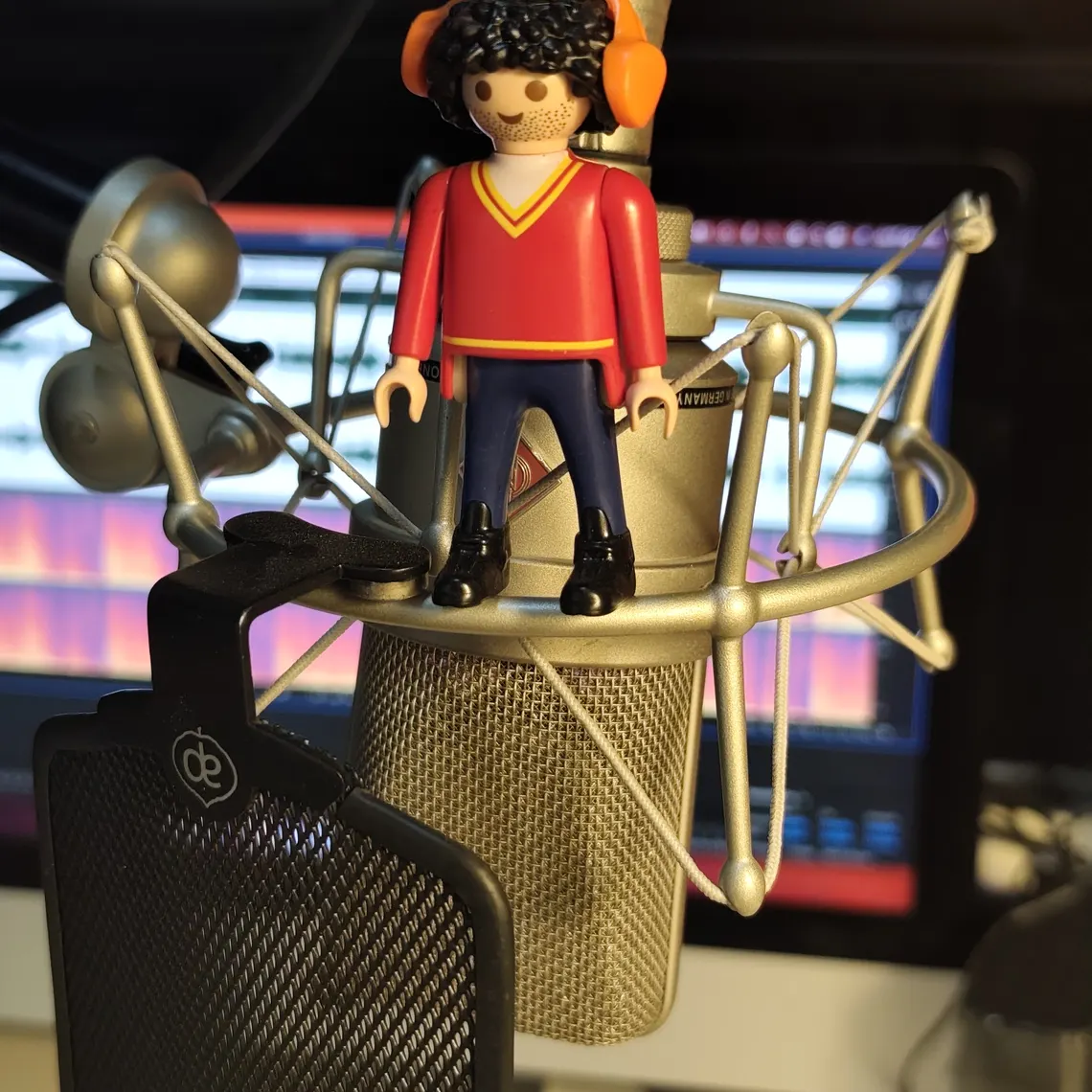
I don’t compete with machines on speed or on price per kilo. I compete on the only thing that matters when the message matters: that there’s someone on the other side. Someone who understands your script, who suggests how to improve it, who repeats the line with a different intention because the first one didn’t quite fly. Someone who breathes.
If your project deserves a voice with someone inside, you know where to find me. And if you decide to try AI first, no hard feelings: see you when you get back.